
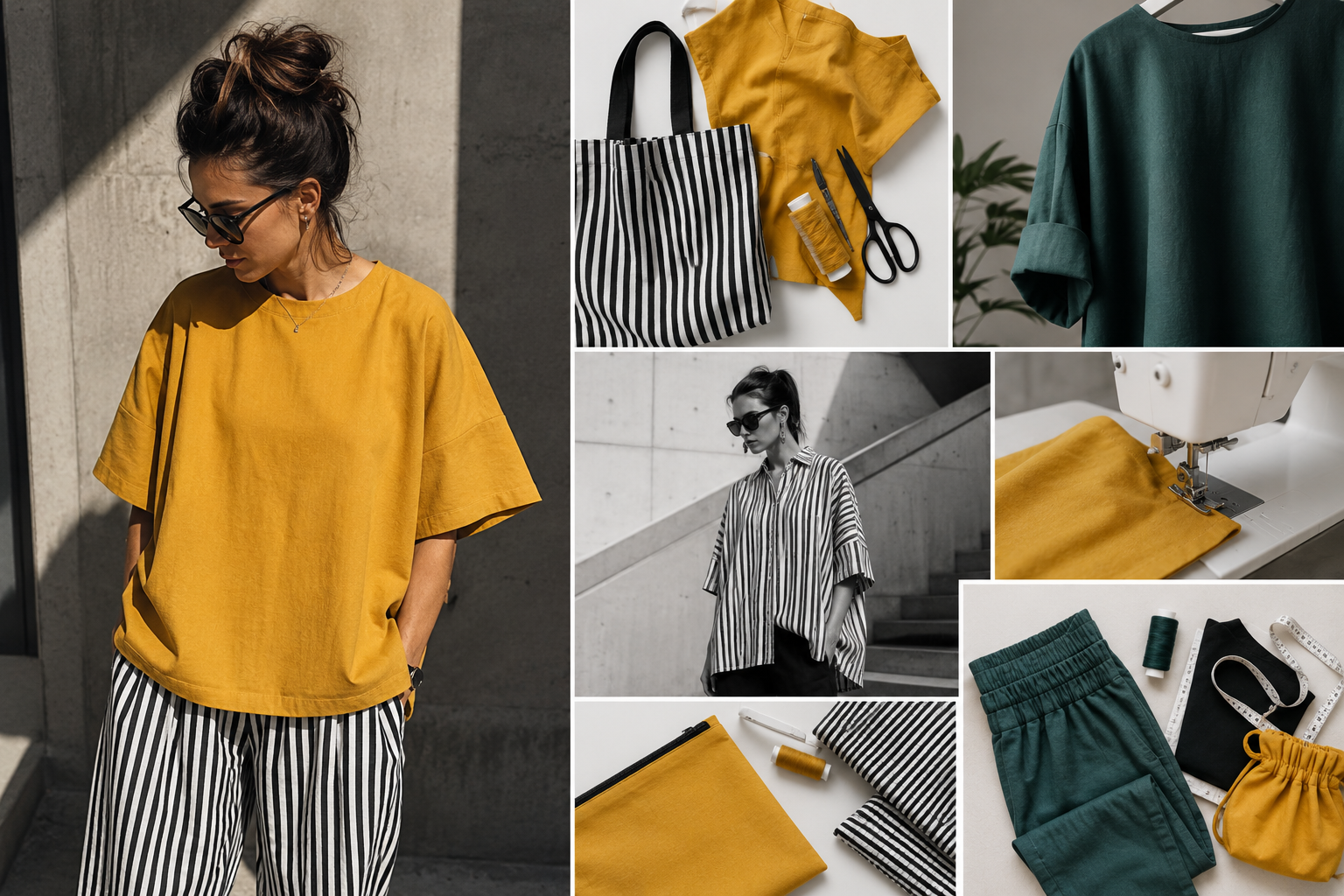
You do not need to start with a fitted dress, tailored pants, or anything that makes your shoulders tense up before you even thread the machine. The best beginner sewing projects for adults are the ones that give you a win early – something useful, wearable, and forgiving enough that one crooked seam does not ruin the whole experience.
That matters more than most new sewists realize. A first project sets the tone for everything that comes after it. If it is too fussy, too precise, or packed with unfamiliar steps, sewing starts to feel like a test. If it is simple but still stylish, you learn faster, finish more often, and actually want to make the next thing.
What makes a sewing project beginner-friendly?
A good first project is not just “easy” on paper. It should be easy in the ways that count when you are sitting at your machine, trying to remember what stitch length you used two minutes ago.
The most beginner-friendly projects usually have straight or gently curved seams, a forgiving fit, and fabric options that are stable and easy to control. They also avoid advanced closures like invisible zippers, complicated collars, or detailed fitting adjustments. That does not mean they look basic. It just means the construction is working with you, not against you.
This is why oversized clothing and simple accessories are such a smart place to begin. You still get that satisfying feeling of making something real, but without the pressure of perfect tailoring.
12 beginner sewing projects for adults that are actually satisfying
1. Tote bag
A tote bag is still one of the best first projects for a reason. You practice straight seams, pressing, turning, and attaching straps, all on a shape that is easy to understand. It is useful immediately, and it does not ask for fitting knowledge.
Choose a medium-weight woven fabric like canvas or cotton twill if you want structure, or quilting cotton if you want something lighter. If your topstitching is not perfectly even, it will still look good and still work.
2. Zipper pouch
A zipper can feel intimidating until you sew one into a small pouch and realize it is manageable in a simple format. This project teaches precision in a low-risk way. If it goes slightly off, you have still learned a lot in one afternoon.
A pouch also helps you understand layers, lining, and turning an item right side out. Those are foundational skills that show up in bags and garments later.
3. Elastic-waist shorts
This is where many adults start feeling like they can really make their own clothes. Elastic-waist shorts are wearable, forgiving, and much easier than any fitted bottom with a zipper or waistband.
Look for a pattern with relaxed legs and clear step-by-step instructions. Stable cottons, linen blends, or light twill are good choices. The beauty of this project is that comfort is built in, so the final result does not need to fit with tailored precision to feel great.
4. Pull-on skirt
A simple pull-on skirt is another strong early garment. You practice seams, hems, and an elastic casing, but the shape stays approachable. A gathered or A-line version is usually more forgiving than anything slim or highly shaped.
If you want the easiest sewing experience, avoid slippery fabrics at first. Crisp cotton poplin or linen blends will make the process calmer and the outcome easier to control.
5. Oversized top
An oversized top is one of the smartest beginner sewing projects for adults because it gives you a real wardrobe piece without demanding advanced fitting skills. A relaxed silhouette allows room for movement, room for error, and room to learn.
This kind of project works especially well for beginners who want to make clothes they will actually wear outside the house. You still learn how garment pieces come together, but you are not wrestling with darts, set-in details, or a close fit at the bust and shoulders.
6. Simple apron
Aprons are practical, giftable, and surprisingly useful for learning. Depending on the style, you may sew patch pockets, straps, facings, or basic shaping, but the project still stays accessible.
This is a nice middle step if you are not ready for full garments yet but want something more interesting than a flat rectangle. It teaches construction in a wearable way.
7. Pillow cover
A pillow cover is ideal if you want to focus on neatness and accuracy without also learning fit. Envelope-back versions are especially beginner-friendly because they skip zippers while still looking polished.
This project is not as exciting as making clothing for some people, and that is a fair trade-off to mention. If your main goal is building a handmade wardrobe, a pillow may not keep you motivated. But if you want practice before cutting into garment fabric, it is a useful confidence builder.
8. Drawstring bag
Drawstring bags are excellent for learning casing construction and working with linings. They also use small amounts of fabric, which keeps the cost low and the pressure down.
This is a great option if you want a quick finish. It feels more polished than a basic practice piece, and it makes a thoughtful gift without requiring advanced techniques.
9. Scrunchies or fabric hair accessories
These are fast, low-pressure, and perfect for getting used to your machine. You can make several in a short session and build muscle memory with stitching, turning, and edge finishing.
The trade-off is that they do not teach as much about garment construction. They are best as a warm-up project, not your only project.
10. Reusable napkins or simple placemats
These are straightforward and helpful for practicing cutting accurately, sewing consistently, and pressing well. They are also a good way to use cotton prints or leftover fabric.
Like pillow covers, these projects are more about skill-building than personal style. Some beginners love that low-stakes start. Others feel more motivated by wearable results. It depends on what keeps you excited enough to keep sewing.
11. Kimono-style robe or layering piece
A loose robe or simple layering jacket can be a surprisingly good first clothing project if the construction is clean and the fit is intentionally relaxed. Because the shape is not close to the body, you can focus on assembling the garment instead of chasing a perfect fit.
This kind of piece feels modern, useful, and much less intimidating than a structured jacket. It is a strong next step once you have sewn one or two simpler items.
12. Beginner-friendly crossbody or belt bag
If you love accessories, a simple bag can be more motivating than home decor. A beginner version with clean lines, clear pieces, and minimal hardware gives you a finished item that feels polished and useful.
This is where professional pattern instructions make a big difference. Bags involve layers, order of operations, and details that can feel confusing without clear guidance. A well-tested digital pattern can remove a lot of that friction.
How to choose the right first project for you
The best first project is not the one that looks easiest online. It is the one you actually want to finish.
If you care most about wearing what you make, start with elastic-waist bottoms or an oversized top. If you want a quick confidence boost, choose a tote, pouch, or drawstring bag. If you are mainly trying to get comfortable with your machine, small accessories are a gentle entry point.
Be honest about your patience level too. A project with repetitive straight seams may be technically easier, but if it bores you, it may end up half-finished in a drawer. Motivation counts.
A few fabric choices that make sewing easier
Fabric can make a simple project feel hard, or a slightly harder project feel very manageable. For beginners, woven fabrics are usually the easiest place to start because they stay stable while you cut and sew.
Good first choices include cotton poplin, quilting cotton, linen blends, light canvas, cotton twill, and other fabrics that hold their shape without being too thick. Try to avoid slippery satin, very stretchy knits, gauze that shifts around, or anything too sheer for your first few projects.
If a pattern is labeled beginner-friendly but shown in a difficult fabric, trust the fabric recommendation more than the photo. The right material can turn a frustrating afternoon into a smooth one.
Why clear patterns matter more than ambition
A lot of adults are not scared of sewing itself. They are scared of badly explained patterns, confusing diagrams, and instructions that assume they already know what everything means.
That fear is justified. Traditional sewing language can make a very doable project sound much harder than it is. Clear, step-by-step guidance changes the experience completely. You spend less time decoding and more time sewing.
That is one reason beginner-focused digital patterns are such a good fit for new makers. When the file formats are practical, the instructions are visual and well ordered, and the design itself is built for success, you get to focus on learning instead of guessing. Brands like Dadi Design are built around exactly that kind of support, especially for modern oversized clothing and simple accessories that do not punish beginners for being beginners.
Start with the project that feels exciting, not the one you think you are “supposed” to make first. Sewing gets easier when your first finish makes you proud enough to begin again.
Leave a Reply
You must be logged in to post a comment.