
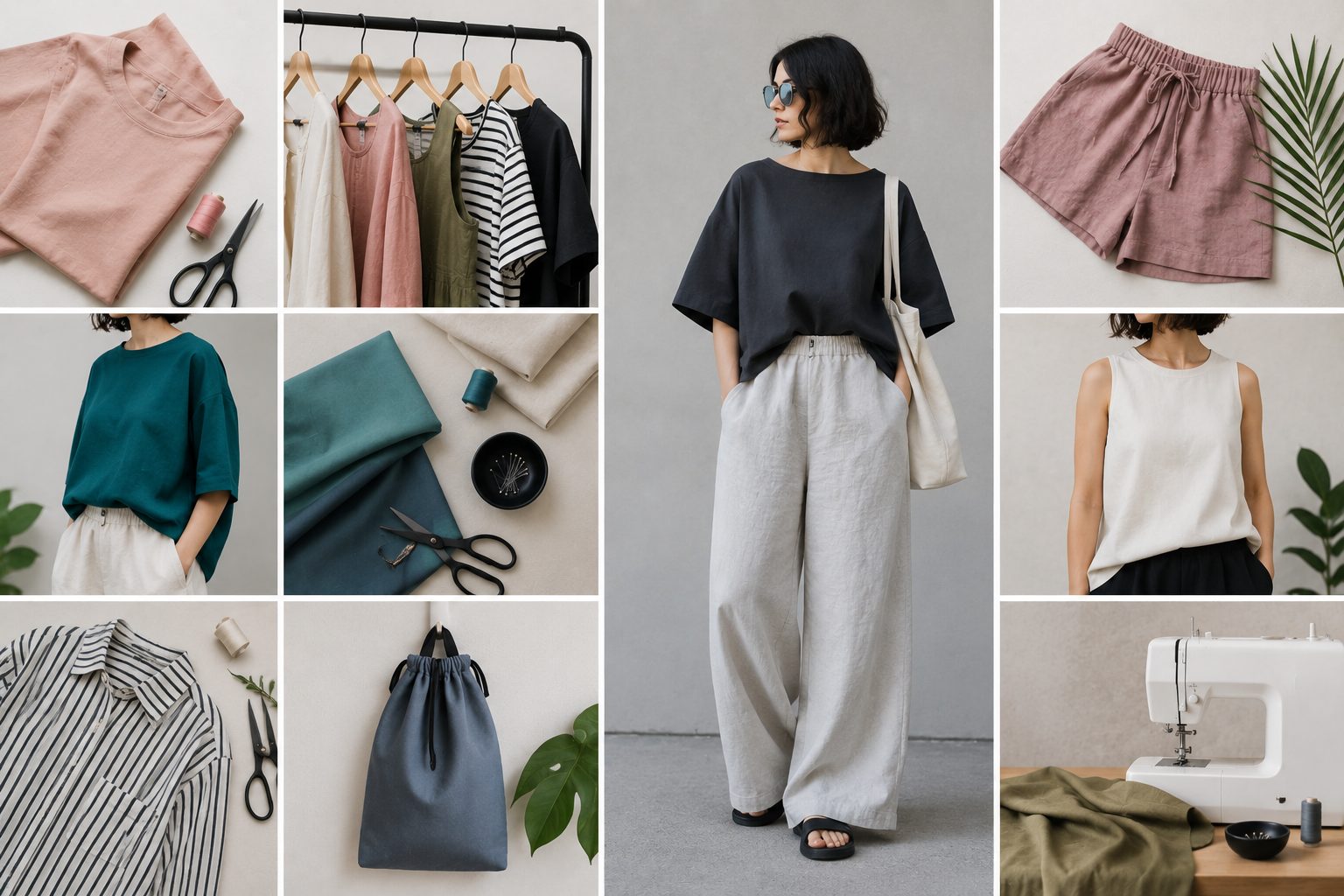
You do not need to start with pajamas from a 40-page pattern booklet or a fitted dress that asks for perfect darts on day one. The best beginner sewing projects clothes are the ones you can finish, enjoy wearing, and learn from without feeling like you accidentally enrolled in fashion school. If you are new to garment sewing, simple shapes, relaxed fits, and low-pressure construction will take you much further than ambitious projects that stall on your table for weeks.
That is why the smartest first clothes to sew are usually the ones with a little room to breathe. Oversized tops, elastic-waist bottoms, and layering pieces give you real practice without demanding advanced fitting skills. You still learn how fabric behaves, how seams come together, and how a garment becomes something wearable. You just do it in a way that feels encouraging instead of punishing.
What makes beginner sewing projects clothes-friendly?
A good first clothing project is not just “easy.” It is forgiving. That means fewer pattern pieces, simple seam lines, and a shape that still looks good even if your stitching is not perfectly even yet. It also helps when the garment does not rely on zippers, button plackets, collars, or close body fitting.
Fabric choice matters just as much as the design. Stable woven fabrics are usually easier for beginners than slippery satins or very stretchy knits. Cotton poplin, linen blends, lightweight canvas, chambray, and double gauze can be much more cooperative under the presser foot. If a pattern is drafted for those kinds of fabrics, the whole experience tends to feel calmer.
The other thing beginners often overlook is whether they actually want to wear the final piece. Motivation matters. A basic garment in a modern shape will teach you more than a practice project that feels dated or costume-like. When the end result fits your real wardrobe, you are far more likely to finish it.
1. An oversized T-shirt top
If you want the easiest entry into sewing clothes, start here. An oversized top gives you room to learn straight seams, hems, neck finishing, and sleeve attachment without the pressure of a fitted silhouette. Even if the shoulder seam is not exact to the millimeter, the style still works.
This kind of project is especially useful because it becomes a true wardrobe basic. Wear it with jeans, soft pants, or layered under a jacket, and it does not feel like a “beginner project.” It feels like clothing.
For a first attempt, a woven oversized tee is often less frustrating than a knit one. Knit fabric can be beginner-friendly in the right pattern, but it depends on your machine setup and comfort level. If your machine tends to chew up stretchy fabric, a relaxed woven top may be the better first win.
2. Elastic-waist shorts
Elastic-waist shorts are one of the most satisfying early garment projects because they introduce you to bottom construction without adding hard closures. You learn side seams, inseams, a waistband channel, and hemming, but you skip the parts that usually intimidate beginners, like fly fronts and precision tailoring.
They are also quick enough that you can focus on the process rather than getting lost in endless steps. If the fit is slightly loose, that is usually fine. In fact, that relaxed fit is part of why they work so well as a first project.
The trade-off is fabric choice. Crisp cottons and linen blends are beginner-friendly, but if you choose something very thick, the waistband can feel bulky. Very drapey fabric can also make the shorts harder to manage. A medium-light woven is usually the sweet spot.
3. Pull-on wide-leg pants
These are a natural next step after shorts. Wide-leg pants with an elastic waist keep the same beginner-friendly logic but add a little more sewing time and a bigger sense of accomplishment. They look modern, feel comfortable, and leave room for learning.
This is where oversized style really helps. Relaxed pants do not require advanced fitting through the hip and thigh in the same way slim pants do. You can focus on building skills instead of chasing a perfect tailored fit.
Length matters here. If you are petite or tall, you may need a simple adjustment at the hem. That is not a bad thing. It is one of the easiest customizations to make, and it teaches you that sewing your own clothes can be practical, not precious.
Beginner sewing projects clothes to avoid at first
Some garments look simple in photos but are not truly beginner-friendly once you get into the construction. Fitted button-up shirts, structured blazers, jeans, and body-hugging knit dresses can all be great goals for later, but they ask for more precision than most new sewists enjoy right away.
That does not mean you should avoid challenge forever. It just means your first few projects should build confidence, not drain it. When a project includes multiple closures, detailed fitting, or techniques you have never seen before, it stops being a learning curve and starts feeling like ten learning curves stacked together.
4. A simple boxy blouse
A boxy blouse is one of those pieces that quietly teaches a lot. You practice shaping a neckline, sewing shoulder seams, attaching sleeves or using cut-on sleeves, and making a clean hem. Because the body is not closely fitted, you still have room for small mistakes.
This project works especially well if you want something polished enough to wear out but still easy to sew at home. In a good fabric, it can look surprisingly elevated. Think less “first attempt” and more “where did you get that top?”
5. A relaxed dress with minimal shaping
For beginners who want a one-and-done outfit, a loose dress is a strong choice. Look for styles with simple bodices, gathered or tiered shapes, or straight silhouettes that do not depend on close fitting through the bust or waist.
The benefit is obvious: one project, one full outfit. The caution is that larger projects can feel longer to sew. If your attention span is short, a top or shorts may be the better place to begin. But if you love the idea of finishing one thing and wearing it immediately, a relaxed dress can be incredibly motivating.
6. A sleeveless tank or shell top
Removing sleeves removes one of the biggest beginner stress points. A sleeveless shell top still teaches garment construction, but it simplifies the process enough that many new sewists find it far less intimidating.
The main detail to watch is finishing the armholes and neckline cleanly. Some patterns make this very approachable with facings or simple binding methods. If the instructions are clear and beginner-first, this project can be a confidence booster rather than a technical puzzle.
7. A sweatshirt-style pullover
If you are ready to try knits, a relaxed pullover is often a better choice than a fitted T-shirt. The shape is forgiving, and stable sweatshirt fleece or French terry is usually easier to handle than thin jersey that curls and stretches around every edge.
This is one of those it-depends projects. If you have never sewn knits and your machine setup is basic, you may want to practice on a scrap first. But if the pattern is designed for beginners and the silhouette is roomy, it can absolutely be a realistic early project.
8. An easy apron dress or pinafore
This style is underrated for beginners. It layers well, tends to have simple construction, and usually does not require difficult fitting. Depending on the design, you may get practice with straps, patch pockets, and a garment that feels a little more styled than a basic top.
It is also practical. That matters more than people think. When you make something useful and wearable, your confidence grows faster because the result has a place in your life right away.
9. A matching set
This may sound advanced, but it can be very beginner-friendly if each piece is simple on its own. An oversized top with elastic-waist shorts or pants gives you two easy garments and a polished result. You are not learning complicated new skills – you are repeating approachable ones in a way that makes your wardrobe look intentional.
Repeating techniques is one of the fastest ways to improve. By the second waistband or hem, your hands usually relax. Your stitching gets steadier. The project starts to feel less like guessing and more like making.
How to choose your first project without overthinking it
Pick a garment with a relaxed fit, a fabric you can control, and instructions that explain every step clearly. That last part matters a lot. A good beginner pattern should not assume you already know what every sewing term means, and it should not make you decode vague diagrams halfway through the project.
It also helps to choose a style that matches how you already dress. If you live in oversized tops and easy pants, sew those first. If you prefer simple dresses, start there. The point is not to prove you can sew something complicated. The point is to build a wardrobe one successful project at a time.
This is exactly why beginner-focused pattern brands like Dadi Design resonate with new sewists. Clear instructions, professional digital formats, and modern oversized shapes remove a lot of the friction that makes traditional garment sewing feel harder than it needs to be.
A small truth that makes sewing easier
Your first clothes do not need to be perfect to be worth wearing. They need to be finished, comfortable, and close enough that you feel proud putting them on. That is how confidence is built in sewing – not through flawless technique from the start, but through projects that teach you something useful and leave you excited to make the next one.
So if you are choosing your first garment, choose the one that feels possible and appealing right now. A relaxed top, easy pants, or a simple dress can do more for your skills than a complicated dream project waiting for the “right time.” The right time is usually the moment you stop trying to sew perfectly and start sewing something you will actually wear.
Leave a Reply
You must be logged in to post a comment.