
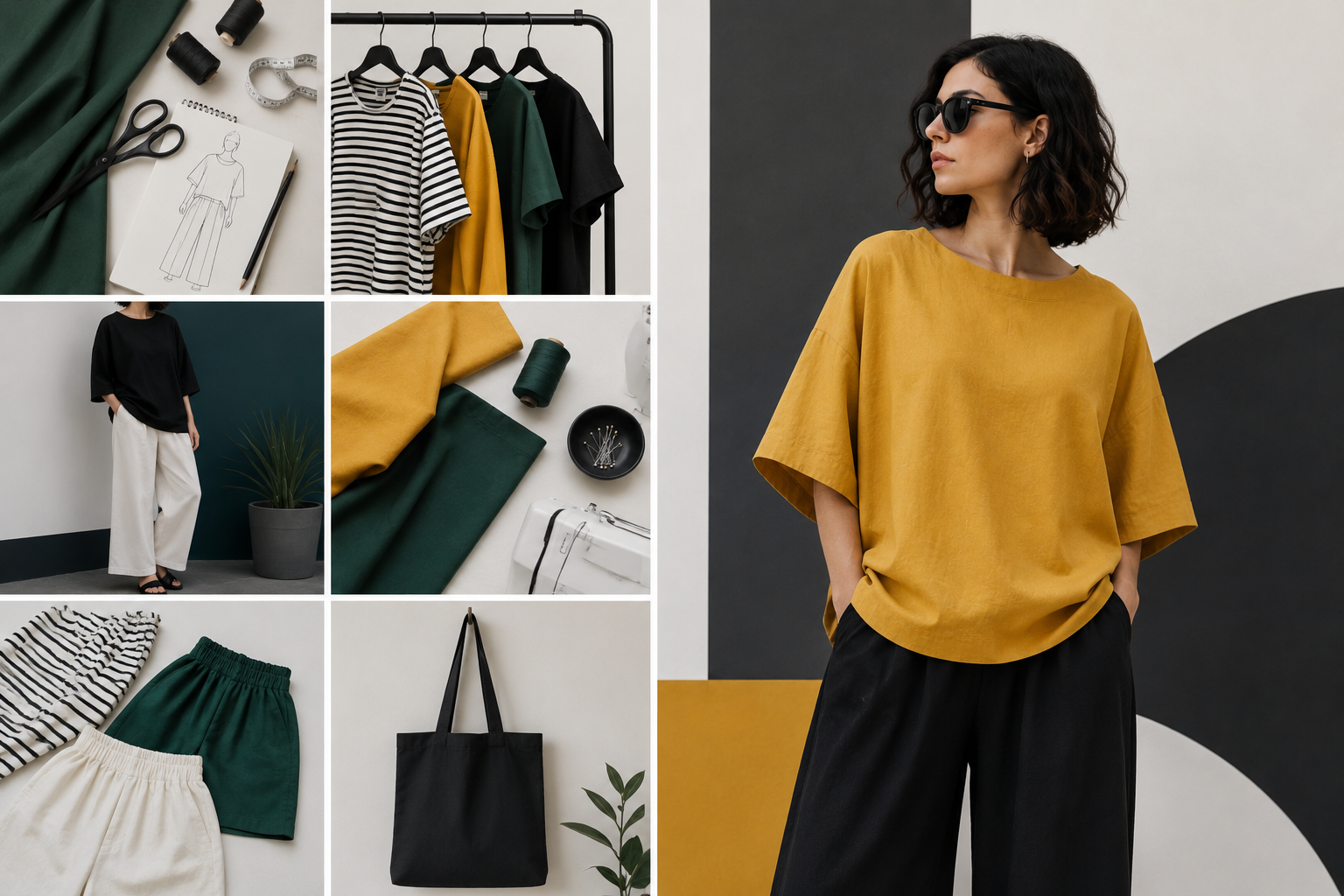
Some sewing patterns look simple until you open the instructions and realize you are somehow expected to know what understitching, clipping curves, and easing a sleeve cap means. That is exactly why choosing the best beginner sewing patterns matters so much. The right pattern does not just give you a finished item – it gives you a first win, a calmer sewing session, and the confidence to keep going.
If you are new to sewing, the best place to start is not with the trendiest project or the most fitted garment. It is with patterns that are forgiving, clearly explained, and satisfying to wear or use right away. A good beginner pattern should help you learn one or two new skills at a time, not ten.
What makes the best beginner sewing patterns?
A beginner-friendly pattern is less about the final look and more about how the project is built. The easiest patterns usually have simple shapes, minimal fitting, and construction that makes sense as you sew. Oversized garments, elastic waist styles, simple tops, and practical bags all tend to work well because they leave room for learning without demanding perfect precision.
Clear instructions matter just as much as the design. A pattern can be technically easy and still feel frustrating if the steps are vague or packed with industry terms. The best beginner sewing patterns explain what to do in plain language, show each stage clearly, and guide you through the order of construction so you are not guessing your way through.
Fabric choice also changes the difficulty level. A pattern designed for stable woven fabrics will usually be easier for a first project than one made for slippery satin or stretchy jersey. Even a simple design can become harder if the fabric shifts, curls, or frays heavily. That is why the pattern and the fabric need to work together.
Start with projects that forgive small mistakes
One of the fastest ways to enjoy sewing is to make something that still looks good even if your topstitching is not perfectly straight. That is where relaxed silhouettes really shine. Oversized shirts, boxy tops, loose pants, simple dresses, and everyday tote bags tend to be more beginner-friendly because they are meant to have ease.
That does not mean fitted pieces are off-limits forever. It just means they are rarely the most encouraging first step. If a project depends on a precise bust adjustment, a flawless zipper, or tailoring at the shoulders, it can feel like a lot when you are still learning how to cut accurately and sew a clean seam.
The goal at the start is not perfection. It is momentum.
12 best beginner sewing patterns worth trying
1. Tote bag
A tote bag is a classic first project for a reason. It teaches straight seams, pressing, turning, and topstitching without involving fit. You end up with something useful, and if the stitching is a little uneven, no one notices.
A simple lined tote adds a bit more practice without becoming overwhelming. It is a great step up once you have made one basic version.
2. Zipper pouch
This one depends on your comfort level. Some beginners love learning a zipper early because it sounds harder than it is. Others prefer to save it for project three or four. If the instructions are clear, a small pouch can be an excellent confidence-builder.
Choose a pattern with a standard zipper insertion method and minimal shaping. Keep the fabric stable and the size manageable.
3. Elastic waist shorts
Elastic waist shorts are often among the best beginner sewing patterns because they introduce garment sewing without the stress of a fitted waistband or closure. You learn about leg seams, inseams, casings, and basic pressing, and the fit is more forgiving than tailored pants.
They are especially beginner-friendly in cotton poplin, linen blends, or other easy woven fabrics.
4. Pull-on wide leg pants
If you want a project that feels stylish and wearable fast, loose pull-on pants are a strong choice. A wide leg shape gives you room to sew and room to move. You get the satisfaction of making real clothing without dealing with a zipper fly or close-fitting seat adjustments.
The trade-off is that pants use more fabric and can feel slightly bigger to handle on a small table. Still, the construction is usually very approachable.
5. Boxy top
A boxy woven top is one of the best early garment projects. It usually has simple front and back pieces, a relaxed fit, and clean finishing methods that are easy to repeat. You will practice hemming, sewing side seams, and finishing a neckline without needing advanced fitting skills.
Look for dropped shoulders or cut-on sleeves if you want to keep things extra simple.
6. Oversized shirt
An oversized shirt is a great example of a project that looks polished but can still be approachable when the pattern is designed well. The relaxed fit removes some of the pressure around exact shaping, and you learn transferable skills like collars, cuffs, or button plackets one step at a time.
This is not always the very first project, but it is an excellent early goal. If the instructions are detailed and the pieces are thoughtfully drafted, it can be much less intimidating than a traditional fitted button-up.
7. Simple skirt with elastic waist
A woven skirt with an elastic waist is fast, practical, and beginner-friendly. It lets you focus on clean seams and hems while still ending up with something you can wear often. Depending on the design, you may also learn gathering, which is a useful skill for many future patterns.
If you want quick results, this is one of the safest choices.
8. Shift dress or simple dress with ease
A relaxed dress can be easier than a fitted top because the fit does not need to be exact in as many places. Styles with wide straps, simple facings, or grown-on sleeves are especially approachable. You get a full garment with fewer technical barriers.
Just watch the neckline and armholes. Those areas need good instructions, even on a simple design.
9. Kimono-style jacket
A lightweight jacket with simple, straight-cut construction can be surprisingly beginner-friendly. Many kimono-style designs avoid set-in sleeves, complex closures, and detailed tailoring. That makes them a good introduction to layering pieces.
This is a nice option if you want something that feels a little different from the usual first projects.
10. Apron
Aprons are practical, giftable, and low-pressure. They usually involve straight seams, ties, patch pockets, and simple finishing. Because fit is flexible, they are ideal for learning accuracy without worrying about body measurements too much.
They are also a smart project for testing your cutting and pressing habits.
11. Cushion cover
Home projects are often overlooked, but a cushion cover can teach skills that transfer directly to garments. You practice seam allowance accuracy, corners, closures, and fabric handling in a very controlled format.
If clothing feels like too much right now, this is a solid place to start.
12. Crossbody bag or simple everyday bag
Once you are ready for a little more structure, a basic bag pattern can stretch your skills in a useful way. You may work with interfacing, straps, pockets, or a zipper, but the project still avoids garment fitting. For many beginners, bags are the sweet spot between easy and satisfying.
How to choose the right beginner pattern for you
The best beginner sewing patterns are not always the easiest ones on paper. They are the ones you actually want to finish. If you love oversized clothing, start there. If bags feel more practical, begin with accessories. Motivation matters because sewing always goes more smoothly when you care about the final result.
At the same time, it helps to be honest about your current skill level. A project can be exciting and still be too big of a leap for right now. If you have never used your machine before, a lined jacket is probably not your first stop. If you have made a tote and a skirt already, an oversized shirt may be completely realistic.
Look closely at the pattern details before you buy. Check the recommended fabrics, the number of pieces, the closure type, and how the instructions are presented. Beginner-friendly brands usually make this information easy to understand. Dadi Design, for example, focuses on modern PDF patterns with clear step-by-step guidance and forgiving shapes, which is exactly the kind of support that helps new sewists keep moving.
A few pattern features that make sewing easier
Simple does not have to mean boring. Some design features make a pattern easier without making it plain. Elastic waists, dropped shoulders, patch pockets, facings instead of full linings, and roomy silhouettes all reduce stress while still looking polished.
Digital format can also make a real difference. If a pattern comes in A4, Letter, A0, and Projector files, it gives you flexibility based on how you like to work. That might sound like a small detail, but anything that lowers setup frustration is worth paying attention to when you are just starting out.
Personal support matters too. Beginners often get stuck on small questions that feel big in the moment. Clear instructions are the first layer of help, but knowing support is available can make you much more likely to begin.
The best first pattern is the one that teaches without punishing
You do not need to prove anything with your first sewing project. You do not need a fitted blazer, invisible zipper, or couture finish to count as a real sewist. The best beginner sewing patterns meet you where you are, help you build skill by skill, and leave you with something you are proud to use or wear.
Start with a pattern that feels calm, clear, and genuinely wearable. A simple project finished well will teach you more than an ambitious one abandoned halfway through. And once you get that first good result, the next pattern gets a whole lot less scary.
Leave a Reply
You must be logged in to post a comment.