
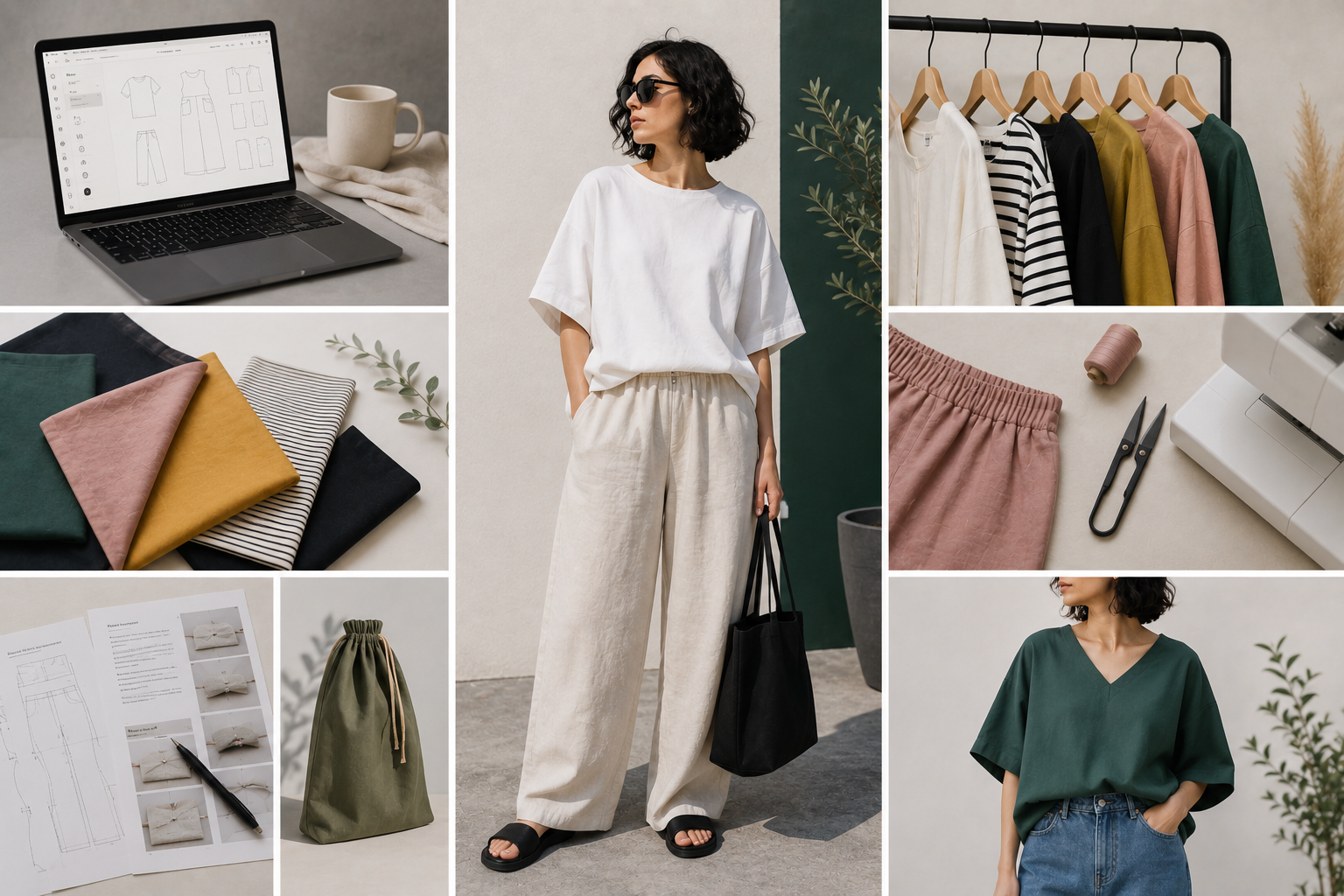
The first time you open a sewing pattern and feel instantly confused, it is usually not your fault. Many traditional patterns assume you already know the language, the workflow, and the little decision points that experienced sewists barely notice anymore. That is exactly why modern PDF sewing patterns have become such a good fit for beginners. They remove a lot of the friction that can make sewing feel harder than it needs to be.
What makes them feel different is not just that they are digital. It is that the best ones are designed around how real people learn at home. You can download them right away, choose the file format that works for your setup, and follow instructions that are written to help rather than impress. If you are trying to make clothes or accessories you will actually use, that change matters.
What makes modern PDF sewing patterns modern?
The word modern gets used loosely in sewing, so it helps to be specific. In this case, modern PDF sewing patterns are not simply old-school patterns turned into digital files. The best ones are built for today’s home sewist from the start.
That usually means a cleaner user experience. Sizes are easier to identify, file options are more practical, and the instructions are often more visual and more human. Instead of expecting you to decode dense pattern language, a modern pattern tends to guide you step by step. That is a big difference when you are still learning how to read markings, match edges, or understand construction order.
Modern also often refers to the style itself. Many beginners are not looking to make stiff, overfitted garments that require perfect precision everywhere. They want relaxed pieces, oversized shapes, easy bags, and wearable basics that look current without demanding advanced fitting skills. A smart pattern meets you there.
Why beginners often do better with PDF patterns
One of the biggest advantages of PDF patterns is control. You are not locked into a single paper sheet or a one-size-fits-all format. You can print at home on A4 or Letter, send an A0 file to a copy shop, or use a projector file if that is your preferred setup. For a beginner, that flexibility can lower the barrier to starting.
There is also less pressure. If you need to reprint a page, you can. If you want to cut one size and keep another for later, you can print again. If you accidentally spill coffee on your instruction pages, your pattern is not ruined forever. That may sound small, but it makes sewing feel more forgiving.
The best digital patterns also tend to come with better teaching. Because they are sold directly to customers online, many independent pattern brands know they need to support beginners well. That often leads to clearer illustrations, better-tested instructions, and more thoughtful formatting. Not every PDF pattern is beginner-friendly, of course, but many are far easier to approach than older commercial patterns.
The real benefits of modern PDF sewing patterns
Convenience is the obvious one, but it is not the only reason people switch. Instant access is helpful, especially when motivation strikes and you want to start today rather than wait for shipping. Still, the real value goes deeper than speed.
A good PDF pattern can make the entire sewing process feel more manageable. You can read the instructions before printing anything. You can check the finished measurements, the fabric suggestions, and the supply list while deciding whether the project fits your current skill level. That helps you choose more confidently instead of guessing.
There is a financial upside too. Digital patterns are often more accessible in price, and you are not paying for shipping. For someone building sewing skills, that matters. You may want to try a simple bag, then an oversized top, then an easy dress. Lower upfront cost makes experimenting less stressful.
Another benefit is repeat use. Once you have a well-designed pattern, you can return to it in different fabrics and get completely different results. A relaxed garment in linen feels different from the same shape in brushed cotton or lightweight denim. Beginners often gain confidence faster when they repeat a pattern they already understand.
What to look for before you buy
Not all patterns labeled beginner are truly beginner-friendly. Some have simple shapes but confusing instructions. Others look stylish in photos but leave out practical guidance that new sewists need.
Start with the file formats. If a pattern only comes in one format, think about whether it matches your setup. Many home sewists want Letter or A4 for printing at home, while others prefer A0 for less taping. Projector files are especially useful if you want to cut fabric directly without printing paper at all. Having options is a strong sign that the pattern was built with real users in mind.
Then look at the instructions. Are they visual? Are the steps broken down clearly? Do they explain the order of construction in plain language? A beginner pattern should not make you feel like you need a translation guide just to begin.
Style matters too. If you are new to sewing, a forgiving silhouette is often a better first project than something highly fitted. Oversized shirts, relaxed dresses, easy pants with elastic, and simple bags tend to be more rewarding because small imperfections are less obvious and fit is more flexible. That does not mean basic has to mean boring. Modern design can still feel stylish, clean, and current.
The trade-offs to know about
PDF patterns are not perfect for everyone. Taping pages together can be annoying, especially on larger garments. If you do not enjoy prep work, home printing may feel like a hurdle. In that case, A0 copy shop files or projector sewing may be a better fit.
There is also a learning curve in managing digital files. You may need to download, organize, and store your patterns in a way that makes sense for you. Some people love having everything on a laptop or tablet. Others miss the simplicity of pulling a printed envelope off a shelf.
And while digital access is convenient, quality still varies widely. A polished product should include tested files, accurate scaling, clear layers when available, and instructions that actually support the sewist. If those basics are missing, digital can feel frustrating fast.
How modern PDF sewing patterns support confidence
For most beginners, confidence does not come from mastering every technical detail right away. It comes from finishing something that looks good, fits your life, and makes you want to sew again.
That is where modern PDF patterns really shine. When the design is approachable and the instructions are clear, you spend less time second-guessing yourself. You can focus on learning one skill at a time instead of getting buried in ten unfamiliar techniques at once.
This is especially true for wearable, relaxed pieces. A roomy top, a simple dress, or a practical bag gives you a real win early on. You learn how construction works, how fabric behaves, and how to follow a pattern without the project becoming so technical that it stops being fun.
Brands like Dadi Design have built their approach around this idea – that sewing should feel achievable from the first project, not reserved for people who already know the rules. That kind of beginner-first thinking is a big reason digital patterns have changed how many people learn.
Are modern PDF sewing patterns worth it?
If you want fast access, clear teaching, and designs that feel wearable now, yes, usually. The value is strongest when the pattern is thoughtfully made for beginners and offered in formats that fit your tools and habits.
If you hate screens, never want to print, and prefer highly structured traditional drafting, your answer may be different. It depends on how you like to work. But for many new sewists, digital patterns remove just enough friction to make starting feel possible.
And that matters more than people think. The best pattern is not the one that sounds the most technical or impressive. It is the one that gets you from “I want to make this” to “I made this” without turning the process into a test.
If you are choosing your next project, look for a pattern that feels clear, forgiving, and genuinely wearable. A calm start beats an ambitious struggle almost every time.
Leave a Reply
You must be logged in to post a comment.